Finding the Right notebooks for writers: A Practical Guide Based on Years of Trial and Error
I have been writing long enough to have gone through dozens of notebooks. Some I loved, some I abandoned after a few pages, and a few I still reach for years later. The search for the perfect notebook is personal, and what works for one writer might frustrate another. But after testing many brands and bindings, I have learned a few things that might save you time and money.
When I started, I thought any notebook would do. I grabbed cheap spiral notebooks from the drugstore and wrote in them until the wire binding popped and pages fell out. That was fine for grocery lists, but for drafts, notes, and ideas I wanted to keep, it was frustrating. A notebook that falls apart is a distraction. Over time, I discovered that the right notebook can make writing easier and more enjoyable. That is what this guide is about: finding the best notebooks for writers, based on real use, not marketing claims.
What Makes a Notebook Work for a Writer
Not every notebook is built the same. Paper weight, coating, and finish affect how ink behaves. Binding affects how flat the notebook opens. Size and portability affect whether you actually carry it. I have notebooks I love at my desk but never take anywhere. I have pocket notebooks that go everywhere but are too small for real writing sessions. The trick is matching the notebook to the task.
For long-form writing, like drafting chapters or keeping a daily journal, I prefer A5 or B5 sizes. They give enough room for a full page of text without being too bulky. For quick notes, interviews, or capturing ideas on the go, pocket-sized notebooks work better. I have used Field Notes for years for that purpose. They are durable, easy to slip into a jacket pocket, and the paper handles most pens well. But they are not great for extended writing sessions because the pages are small.
Paper Matters More Than You Think
If you write with fountain pens, paper quality is everything. Cheap paper feathers and bleeds, ruining the writing experience. Tomoe River paper is famous for being thin yet resistant to bleeding and ghosting. It is the paper inside many Hobonichi Techo planners. I use a Hobonichi Techo for my daily journal and love how smooth the paper feels. It takes fountain pen ink beautifully and shows shading and sheen. The downside is ghosting: you can see writing on the other side. Some people mind this; I do not.
For those who prefer a thicker, more opaque page, Rhodia and Clairefontaine make excellent notebooks. Their paper is smooth, bright, and handles fountain pens, rollerballs, and gel pens without issue. Rhodia’s dotPad is a favorite of mine for brainstorming and outlining. Clairefontaine’s notebooks are similar but often have a slightly different ruling. Both are reliable and affordable.
Another option is Maruman Mnemosyne notebooks. They have a unique layout with a micro-perforated margin that tears out cleanly. The paper is smooth and fountain pen friendly. I use them for meeting notes and project drafts. The binding lies flat, which is a feature I appreciate more as I get older. I do not like fighting a notebook to keep it open.
Brands I Keep Coming Back To
Over the years, I have tested many brands. Some became staples. Moleskine is probably the most recognized name in notebooks. Their classic black notebook has a loyal following. But I have mixed feelings. The paper in standard Moleskine notebooks is not great with fountain pens. It feathers and bleeds. I use Moleskine notebooks for ballpoint or pencil only. If you use a Pilot G2 or a Lamy Safari with a fine nib, you might be okay, but broader nibs will struggle. Moleskine’s strength is their design and durability. The binding holds up, and the elastic closure on some models keeps them secure.
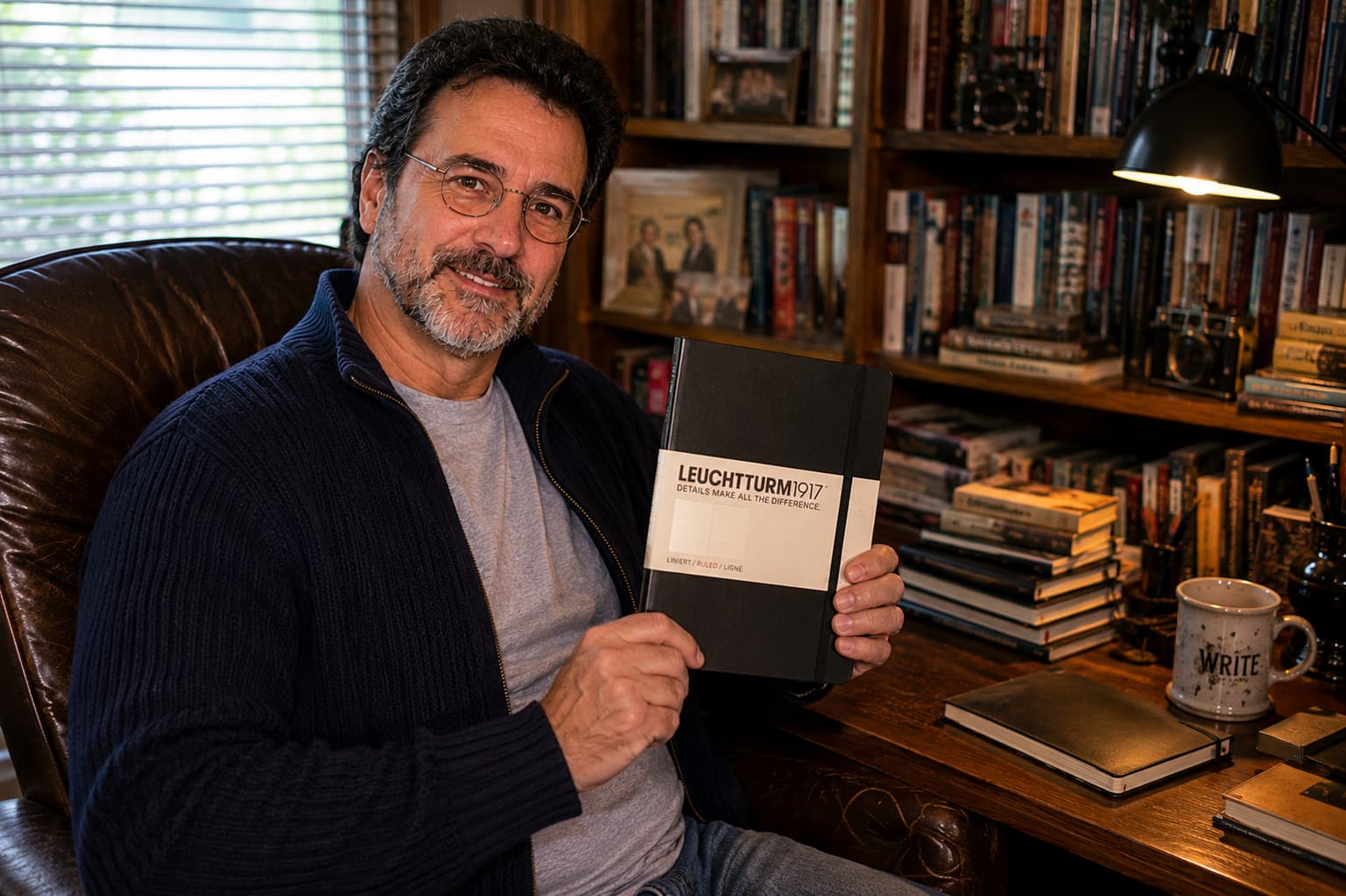
Leuchtturm1917 is another popular brand. Their notebooks have numbered pages, a table of contents, and two ribbon bookmarks. The paper is better than Moleskine for fountain pens, though still not perfect. I use a Leuchtturm1917 for my bullet journal and for drafting longer pieces. The paper handles a Pilot G2 well and shows minimal ghosting. The hardcover is sturdy and travels well. If you want a notebook that looks professional and feels substantial, Leuchtturm1917 is a solid choice.
Baron Fig makes notebooks with a minimalist aesthetic and excellent paper. Their Confidant is a hardcover notebook with lay-flat binding and a dot-grid pattern. The paper is smooth and handles fountain pens and gel pens well. I use Baron Fig notebooks for creative writing and idea development. The dot grid helps me sketch layouts and keep handwriting aligned without being intrusive. Their softcover notebook, the Squire, is good for carrying in a bag.
Midori MD notebooks are simple and elegant. The paper is a cream color and feels wonderful under a fountain pen. They come in A5, B6, and other sizes. I use a Midori MD for Morning Pages, a practice I picked up from The Artists Way. Morning Pages are three pages of stream-of-consciousness writing done first thing in the day. The Midori MD is perfect for this because the paper is a joy to write on and the notebook is unpretentious. It does not have any extra features like page numbers or pockets, which I find freeing.
Doane Paper is less common but worth mentioning. Their notebooks use a blend of paper that is smooth and fountain pen friendly. The covers are sturdy and the binding is sewn. I have a Doane Paper notebook I keep for NaNoWriMo notes and planning. It holds up well under heavy use.
Exacompta and Kokuyo are brands I discovered later. Exacompta makes affordable notebooks with Clairefontaine paper. They are great for everyday note-taking. Kokuyo’s Campus notebooks are popular in Japan and have perforated pages that tear out cleanly. I use Kokuyo notebooks for scratch work and outlines. The paper is good enough for most pens, though fountain pen users might see some ghosting.
Rocketbook is a different kind of notebook. It uses special paper that can be wiped clean with a damp cloth. The pages are reusable. I use a Rocketbook for meeting notes and lists that I do not need to keep forever. It works with Pilot Frixion pens, which use heat-sensitive ink. The writing disappears when microwaved or wiped. For writers who want to save paper or reduce clutter, Rocketbook is a clever option. But it is not for everyone. The feel of the paper is different from traditional notebooks, and you cannot keep a permanent record without scanning it first.
How to Avoid Writer’s Bloc with the Right Notebook
Writer’s bloc is a common struggle. Sometimes the blank page itself is intimidating. Changing notebooks can help. I keep several notebooks in rotation for different moods and tasks. One for Morning Pages, one for drafting, one for ideas and quotes, and a pocket notebook for capturing thoughts on the go. When I feel stuck, I switch notebooks. The fresh page in a different format breaks the mental block.
Another trick is to use a notebook specifically for freewriting. Do not worry about quality. Just write. The practice of Morning Pages from The Artists Way is exactly this. Three pages of whatever comes to mind. No editing, no judgment. Doing this daily has helped me push through many blocks. The notebook does not matter as much as the habit, but a comfortable notebook makes it easier to stick with the practice.
During NaNoWriMo, I rely on a single notebook for planning and drafting. The pressure of writing 50,000 words in a month means I cannot afford distractions. A notebook that feels good and lies flat keeps me focused. I use a Leuchtturm1917 or a Baron Fig for that purpose. They hold up to daily use and the paper does not fight my pen.
Pens and Notebooks: A Few Pairings I Trust
The pen you use is as important as the notebook. I have tried many combinations. Here are a few that work well together:
- Lamy Safari with a fine nib on Tomoe River paper: smooth, wet, and shows ink shading beautifully.
- Pilot G2 in 0.7mm on Leuchtturm1917 paper: consistent, no bleeding, and the gel ink dries fast.
- Field Notes with a Fisher Space Pen: reliable in any weather, though the paper is not ideal for fountain pens.
- Maruman Mnemosyne with a Pilot G2: a clean, no-nonsense combination for everyday notes.
These pairings are not rules. They are what I have settled on after years of trial. Your preferences may differ. The point is to find a combination that makes you want to write.
Final Thoughts on notebooks for writers
I have been asked many times to recommend the best notebooks for writers. My answer always depends on what the writer values most. If you care about paper quality and use fountain pens, look at Tomoe River, Rhodia, or Clairefontaine. If you want durability and a professional look, Leuchtturm1917 or Baron Fig are strong choices. If you want something portable and rugged, Field Notes or a smaller Midori MD work well. If you want to go digital and reduce waste, Rocketbook is worth a look.

The truth is that no single notebook works for every writer. Part of the fun is trying different ones and seeing what fits. I still test new notebooks when I come across them. Sometimes I am surprised. I recently tried a Kokuyo notebook and was impressed by how well it handled a Pilot G2. I keep it in my bag for quick notes.
At the end of the day, a notebook is a tool. It should not get in the way of writing. If a notebook frustrates you, switch. If it inspires you, keep using it. The goal is to fill the pages, not to have a perfect collection of empty notebooks. I have a shelf of notebooks I bought because they looked nice but never wrote in. That is a waste. A well-used notebook, even if it is cheap, is better than an expensive one that sits untouched.
I hope this guide helps you find the notebook that works for you. Whether you are doing Morning Pages, planning a novel for NaNoWriMo, or just keeping a daily journal, the right notebook can make the process smoother and more enjoyable. Keep writing. The notebook is just the stage.